How to Care for a Himalayan Salt Lamp

A salt lamp is a hygroscopic crystal with a bulb inside it. Almost every care
instruction follows from those two facts.
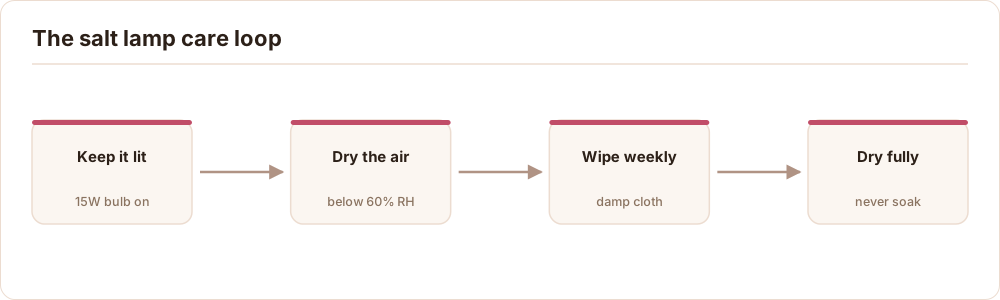
Figure 1 — Warmth, dryness and a weekly wipe. That is the whole routine.
Keep it lit
The bulb is not only decorative — its heat keeps the crystal's surface dry. A
lamp left switched off in a humid room will draw moisture from the air and start
to weep within days. If you are leaving home for a week in a damp climate, put
the lamp in a sealed bag rather than leaving it dark on a shelf.
Choose the right bulb
| Lamp weight | Bulb |
|---|---|
| 2–3 kg | 15 W incandescent |
| 3–5 kg | 25 W incandescent |
| 5–7 kg | 40 W incandescent |
| Over 7 kg | 40–60 W, or two fittings |
Use a clear incandescent or halogen bulb. LEDs run cool, and a cool lamp is a
weeping lamp — they are fine for the glow but do nothing for the crystal.
Weekly cleaning
- Switch off and unplug; let the lamp cool.
- Wipe with a lightly damp lint-free cloth — never a running tap.
- Dry immediately with a dry cloth.
- Switch back on so residual moisture evaporates.
Never soak a lamp, never use detergent and never put one anywhere near a
dishwasher or washing machine.
Placement
Keep lamps away from bathrooms, kitchen sinks, windows that are left open and
laundry rooms. A living room, office or bedside table at normal room humidity is
ideal. Put a coaster or a small dish under the base to catch any condensation
before it reaches furniture.
When it weeps anyway
Damp patches, a puddle at the base or a white crust are all the same problem:
too much humidity, too little heat. Dry the lamp, run it continuously for
24–48 hours, and consider a dehumidifier in the room. Our companion article on
why salt lamps sweat covers the
stubborn cases.
Lifespan
A well-kept lamp lasts for years and loses only a little of its shape. Over a
long life the surface may pit or the base may darken; both are cosmetic. Replace
the fitting rather than the lamp if the cord or socket corrodes — corroded
fittings are a genuine safety issue, and they are cheap to swap.
For retailers
Ship lamps with a printed care card and a spare bulb. The two most common
returns — "it's leaking" and "the bulb blew" — are both answered by a card in the
box, which costs less than the return shipping.