How Himalayan Salt Is Mined and Processed

Understanding the process explains most of what shows up on your invoice — and
most of what can go wrong with a consignment.
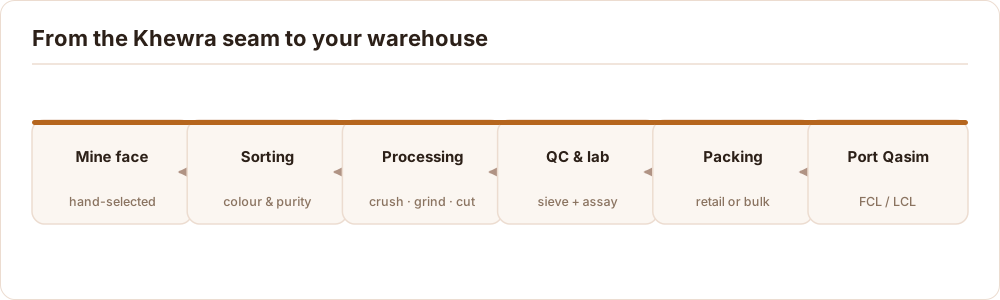
Figure 1 — Six stages, each with its own quality checkpoint.
1. At the mine face
Khewra is worked on the room-and-pillar method: chambers are cut into the
seam while pillars of salt are left standing to support the roof. Only about half
the salt is ever extracted, which is why the mine has lasted centuries. Blasting
is limited and controlled, because fractured crystal is worthless for lamps and
blocks.
2. Sorting
Raw lumps are sorted by hand for colour, size and defects. This is the stage that
decides a lump's destiny: flawless translucent pieces go to lamps and cooking
blocks, cracked or discoloured material goes to crushing. It is also the most
labour-intensive step in the chain.
3. Washing and drying
Edible-grade material is washed to remove mine dust and clay inclusions, then
dried to a controlled moisture level. Skipping or shortcutting the drying step is
the single most common cause of caking on arrival.
4. Crushing and grading
Crushers reduce lumps in stages, and vibrating sieve decks separate the output
into granulation bands. A well-run line recirculates oversize material rather
than over-crushing it, because fines are the lowest-value output.
5. Quality control
Each lot is sampled for:
- Sieve analysis — is the granulation inside tolerance?
- Moisture — measured after drying and again before packing.
- NaCl assay and heavy metals — by an accredited laboratory.
- Foreign matter — visual check plus metal detection on food grades.
6. Packing and dispatch
Edible salt is packed into food-contact liners inside 25 kg bags or 1 tonne jumbo
bags; lamps and blocks are individually wrapped and cartoned. Palletised goods
move to Port Qasim for FCL or LCL shipment.
Every stage after sorting is reversible except one: crystal that has been
crushed cannot be uncrushed. That is why lamp-grade and block-grade material is
priced on selection, not on tonnage.
What this means for your order
Lead times follow the process, not the calendar. A container of standard fine
salt can ship in two to three weeks. Two thousand colour-matched lamps take
longer, because the sorting stage — not the mining — is the constraint. Plan
seasonal orders around sorting capacity and you will rarely be late.