Importing Himalayan Salt in Bulk
Bulk salt is a heavy, low-value-per-kilogram cargo, which means the economics are
decided by loading efficiency and freight — not by the unit price on your quote.
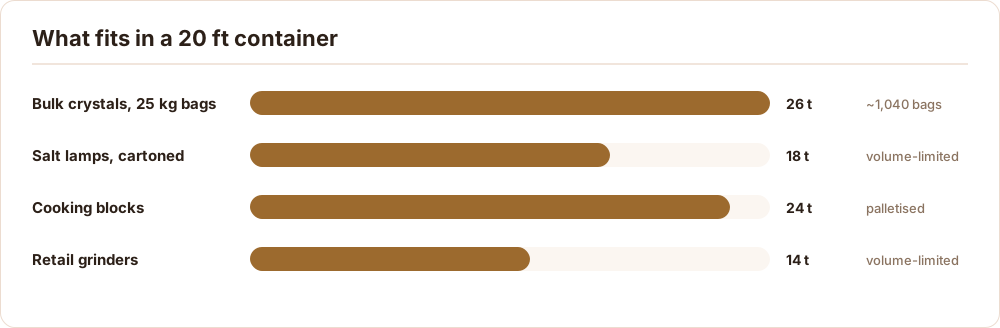
*Figure 1 — Dense goods hit the weight limit; light, bulky goods hit the volume
limit long before it.*
Weight or volume?
A 20 ft container typically takes around 26–28 tonnes of payload. Loose
crystal or bagged salt reaches that weight limit with space still left in the
box. Lamps and cartoned retail goods do the opposite — they run out of **cubic
metres** first, often at only 14–18 tonnes.
Mixing dense and light goods in one container is the standard fix, and it is
worth planning at the quotation stage rather than at the packing stage.
FOB or CIF
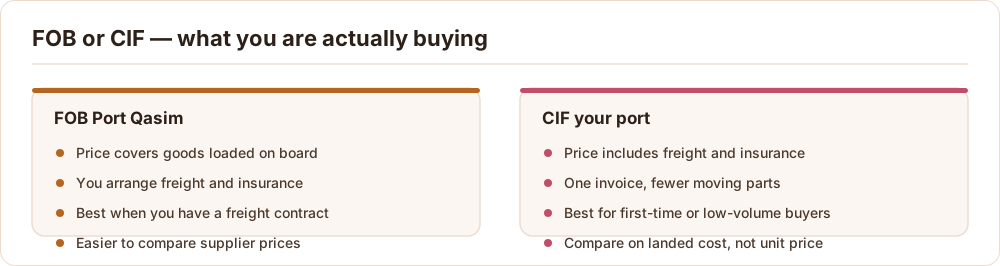
Figure 2 — The same goods, a different division of risk and cost.
If you already have a freight forwarder and a rate, FOB Port Qasim is usually
cheaper and gives you control. If this is a first order, CIF your port is
simpler: one invoice, one counterparty, fewer surprises. Either way, compare
suppliers on landed cost, not on the headline price.
Documents to expect
- Commercial invoice and packing list
- Bill of lading
- Certificate of origin
- Phytosanitary or health certificate, where the destination requires it
- Laboratory analysis report for the shipped lot
- Fumigation certificate for wooden pallets (ISPM 15)
Check the customs code for your destination early. Edible salt, bath salt and
decorative salt articles are often classified differently, and the duty
difference is easily larger than your margin.
Inspection
Book a pre-shipment inspection for a first order at minimum. An inspector checks
granulation, moisture, packaging and count before the container is sealed — which
is the last moment a problem is cheap to fix.
Realistic lead times
| Stage | Typical duration |
|---|---|
| Quotation and sample | 5–10 days |
| Production | 2–4 weeks |
| Inspection and loading | 3–5 days |
| Sailing to EU / US | 3–6 weeks |
Reducing risk on a first order
- Start with one container, not three.
- Pay against documents, with an inspection clause.
- Agree the rejection process in writing before production starts.
- Order a small quantity of each grade you plan to stock, so your second order is
informed by your own sales data.
Asian Salts quotes FOB Port Qasim and CIF worldwide, and works with third-party
inspectors as a matter of routine. Request a quote with your grade,
volume and destination port.