Cooking on a Himalayan Salt Block

A Himalayan salt block is a slab of solid crystal that can be heated past 400 °C
or chilled below freezing. Handled properly it lasts for dozens of services;
rushed onto a hot burner it splits in minutes.
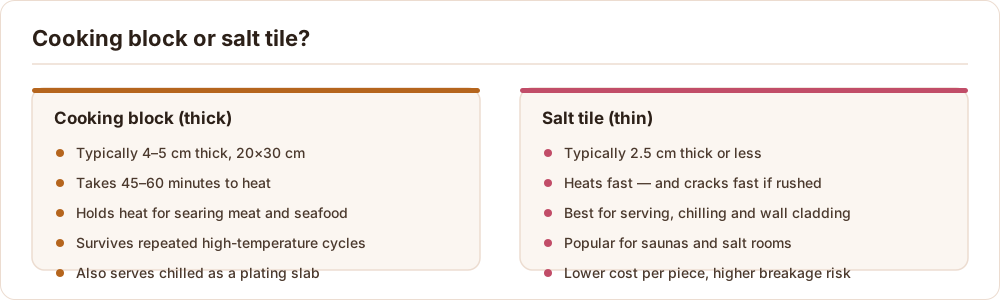
Figure 1 — Thickness decides the job. Blocks sear; tiles serve.
The heating schedule
Salt conducts heat unevenly and expands as it warms, so the rule is **slow and
stepped**:
- Start on the lowest gas flame or burner setting for 15 minutes.
- Step up to medium for another 15 minutes.
- Step up to high and hold for 15–30 minutes until the surface reaches
200–250 °C.
Test the temperature by flicking a few drops of water onto the surface — they
should skitter and vanish instantly. A block that is not hot enough will stick and
over-salt the food; a block heated too fast will crack along its natural planes.
What to cook on it
Thin, fast-cooking items work best on a hot block:
- Prawns, scallops and squid
- Thinly sliced beef, lamb and chicken
- Halloumi, mushrooms and asparagus
- Eggs, once the surface is well seasoned
Skip anything wet or marinated — surface moisture pits the block and dilutes the
salt into the food.
Seasoning intensity
The block seasons the food by contact, so do not salt beforehand. Fatty foods
pick up less salt than lean ones, and a well-used block transfers less salt than
a new one. Cook one test piece before you commit a service to it.
Chilled service
Blocks also work cold. Chill one in the refrigerator for a few hours and serve
sashimi, carpaccio, fruit or ice cream on it — the surface stays cold far longer
than a ceramic plate and lightly seasons as it goes.
Cleaning and lifespan
Let the block cool completely — several hours — then scrape it with a plastic
scraper or a damp cloth. Never use soap, never soak it, and never put it in a
dishwasher. Store it dry.
Expect a block to shrink and darken with use. Retire it when it is under about
2.5 cm thick or when a crack runs edge to edge; from there it can be broken up
for a brine or a bath soak rather than discarded.
For retailers
Sell blocks with a stand and a scraper, and print the heating schedule on the
box. Most warranty complaints come from customers who put a cold block straight
onto a screaming burner — a printed schedule prevents almost all of them.